


ADA Handrail Requirements & Accessibility Standards
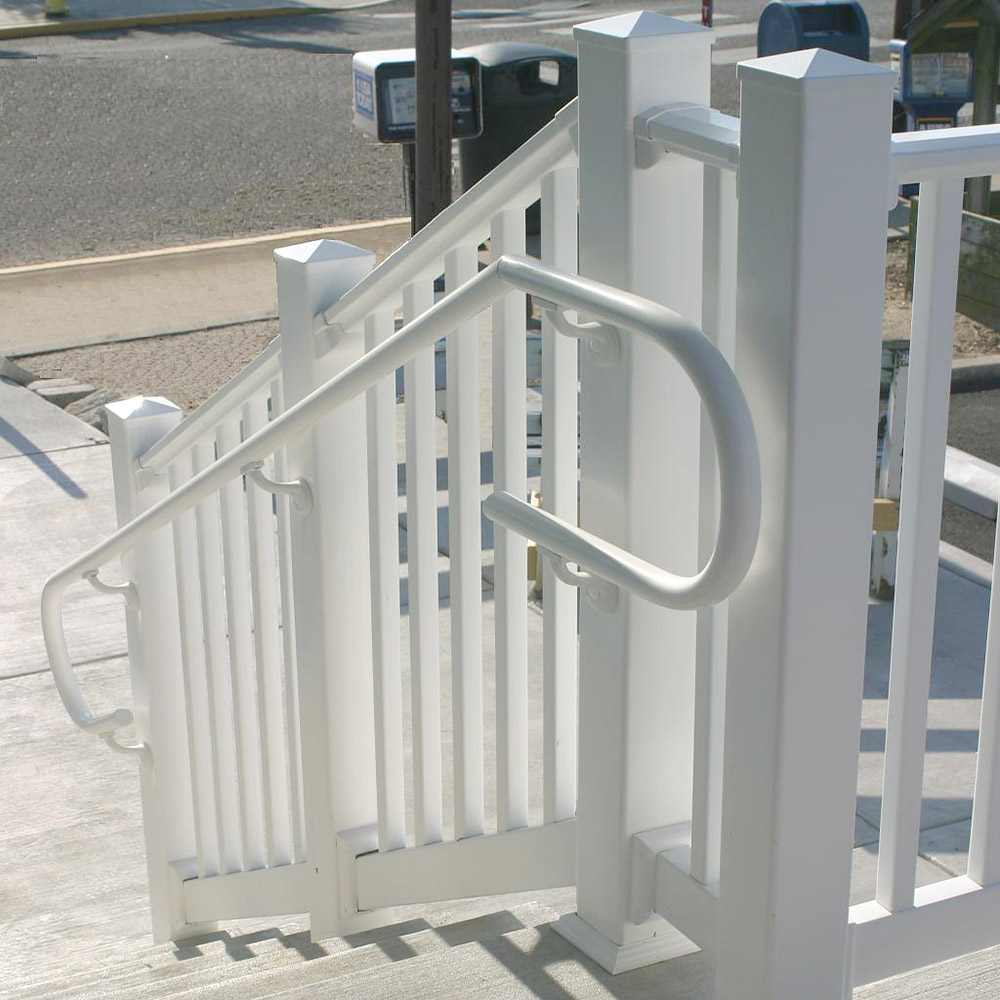
Handrails play a critical role in making built environments safe and accessible for everyone. The Americans with Disabilities Act (ADA) establishes standards that ensure people with disabilities can navigate ramps, stairs, and accessible routes safely. These requirements are not decorative or optional, they are essential for equitable access, legal compliance, and public safety.
Why ADA Handrail Standards Matter
The ADA Standards for Accessible Design set uniform guidelines to ensure that facilities are usable by individuals with disabilities. Handrails help provide balance, stability, and support on stairs and ramps, especially for people with limited mobility, low vision, or balance impairments. Following these standards helps building owners, designers, and contractors create environments that are both compliant and inclusive.
When Handrails are Required
- Both Sides of the Ramp that Rise More than 6"
- Both Sides of Stairs Along Accessible Routes
- Commerical Buildings: Schools, Retail Spaces, Offices, Municipal Buildings, and more
- Some Residential Applications: Multi-family Housing, Facilities with Accessibility Codes
Under ADA Chapter 5 (Stairways and Ramps, which you can find Here!), handrails are required on:
Please note that exact requirements may vary depending on local building codes and whether the project falls under ADA, IBC, IRC, or other standards.
Key ADA Handrail Specifications
| Specification | ADA Requirement | Purpose |
|---|---|---|
| Height & Location | 34"-38" above ramp surface, stair nosing, or walking surface | Ensures comfortable, safe gripping height for most users |
| Graspability & Shape | Circular section: 1 1/4"-2" outside diameter; Non-circular: Perimeter 4"-6 1/4", cross-section max 2 1/4" | Supports graspability for users with limited strength or dexterity and ensures handrails remain easy to grasp |
| Continuity & Extensions | Handrails must be continuous, without breaks, and extend beyond top and bottom landings in many cases. Must include smooth ends avoiding sharp edges or abrupt stops | Provides uninterrupted support and improves safety when transitioning on/off ramps or stairs |
| Clearance to Wall | Minimum 1 1/2" clearance between wall and handrail | Allows full hand wrap and prevents obstruction |
ADA vs Other Codes (IBC/IRC)
- ADA ensures usability and access for individuals with disabilities
- IBC/IRC govern broader construction, safety, and structural guidelines
While ADA Standards focus specifically on accessibility, other model codes, such as the International Building Code (IBC) and International Residential Code (IRC), contain additional structural and safety requirements.Many projects must comply with multiple standards simultaneously, depending on the jurisdiction and building type.
Additional Resources
Want to learn more about ADA guidelines? Check out These Sites
To Learn More About Typical ADA Handrail Components used in Continuous Rail Systems, visit our Vinyl ADA Continuous Handrail Parts article!